Encoding类
Encoding类位于 System.Text 命名空间中,主要用于在不同的编码和 Unicode 之间进行转换。下表中列出了 Encoding 类常见的属性和方法。
| Encoding 类常见的属性和方法 | ||
| 名 称 | 说 明 | |
| 属性 | Default | 获取系统当前 ANSI 代码页的编码 |
| Unicode | 获取使用 Little-Endian 字节顺序的 UTF-16 格式的编码 | |
| UTF-8 | 获取 UTF-8 格式的编码 | |
| UTF-32 | 获取使用 Little-Endian 字节顺序的 UTF-32 格式的编码 | |
| ASCII | 获取 ASCII(7位) 字符集的编码 | |
| 方法 | Convert | 将字节数组从一种编码转换为另一种编码 |
| GetBytes | 将一组字符编码为一个字节序列 | |
| GetString | 将一个字节序列解码为一个字符串 | |
| GetEncoder | 获取一个编码器,该编码器将 Unicode 字符序列转换为已编码的字节序列 | |
| GetDecoder | 获取一个解码器,该解码器将已编码的字节序列转换为字符序列 | |
| GetEncoding | 返回指定格式的编码 | |
利用 Encoding 类的 Convert 方法可将字节数组从一种编码转换为另一种编码。方法原型为:
public static byte[] Convert(Encoding srcEncoding, Encoding dstEncoding, byte[] bytes) 各参数的含义如下。 srcEncoding:表示源编码格式。 dstEncoding:表示目标编码格式。 bytes:待转换的字节数组。 返回值为包含转换结果的 Byte 类型的数组。
将 Unicode 字符串转换为 UTF-8 字符串时,可以参考以下步骤。
(1)利用 Encoding 的 UTF-8 和 Unicode 属性获取 UTF8 格式的编码实例 utf8 和 Unicode 编码实例 unicode,例如:
string unicodeString = "unicode字符串pi(\u03a0)";
Encoding unicode = Encoding.Unicode;
Encoding utf8 = Encoding.UTF8;
(2)利用 unicode 实例的 GetBytes 方法将 Unicode 字符编码为 Unicode 字节数组:
byte[] unicodeBytes = unicode.GetBytes(unicodeString); (3)利用 Encoding 的 Convert 方法将 Unicode 字节数组转换为 UTF8 字节数组:
byte[] utf8Bytes = Encoding.Convert(Encoding.Unicode, Encoding.UTF8, unicodeBytes); (4)最后利用实例 utf8 的 GetString 方法将 UTF8 字节数组解码为 UTF8 字符串:
string utf8String = utf8.GetString(utf8Bytes); Encoder类与Decoder类
在网络传输和文件操作中,如果数据量比较大,需要将其划分为较小的块。对于跨块传输的情况,直接使用 Encoding 类的 GetBytes 方法编写程序比较麻烦,而 Encoder 和 Decoder 由于维护了数据块结尾信息,则可以轻松地实现跨块字符序列的正确编码和解码,因此它们在网络传输和文件操作中很有用。
Encoder 和 Decoder 类位于 System.Text 命名空间下,Encoder 可以将一组字符串转换为一个字节序列,而 Decoder 则将已编码的字节序列解码为字符序列。Encoder 编码的步骤为:
(1)获取 Encoder 实例。利用它对字符编码首先要获取 Encoder 类的实例,由于 Encoder 的构造函数为 protected,不能直接创建该类的实例,必须通过 Encoding 提供的 GetEncoder 方法创建实例,例如:
//获取 ASCII 编码的 Encoder 实例
Encoder ASCiiEncoder = Encoding.ASCII.GetEncoder();
//获取 Unicode 编码的 Encoder 实例
Encoder unicodeEncoder = Encoding.Unicode.GetEncoder();
(2)GetBytes 方法。获取 Encode 实例后,利用它的 GetBytes 方法将一组字符编码转换为字节序列。
方法原型:
public virtual int GetBytes(
   char[] chars,   //要编码的字符数组
   charIndex,      //第一个要编码的字符索引
   int charCount,  //要编码的字符的数目
   byte[] bytes,   //存储编码后的字节序列
   int byteIndex,  //开始写入所生成的字节序列的索引位置
   bool flush      //是否在转换后清楚编码器的内部状态
)
该方法将编码后的字节数组存储在参数 bytes 中,返回结果为写入 bytes 的实际字节数。如果设置 flush 为 false,则编码器会将数据块末尾的尾部字节存储在内部缓冲区中,为下次编码操作中使用这些字节做准备。
(3)GetByteCount 方法。该方法计算对字符序列进行编码后所产生的精确字节数,以确定 GetBytes 方法中 byte 类型数组实例的长度。
方法原型:
public abstract int GetByteCount(
   char[] chars,   //要编码的字符集的字符数组
   int index,      //第一个要编码的字符索引
   int count,      //要编码的字符的数目
   bool flush      //是否在转换后清楚编码器的内部状态
)
Decoder 类解码的步骤为:首先通过 Encoding 的 GetDecoder 方法创建 Decoder 实例,然后用实例的 GetChars 方法将字节序列解码为一组字符。
GetChars 方法用于将一个字节序列解码为一组字符,并从指定的索引位置开始存储这组字符。
方法原型:
public abstract int GetChars(
   byte[] bytes,   //要解码的字符序列的字节数组
   int byteIndex,  //第一个要解码的字节的索引
   int byteCount,  //要解码的字符的数目
   char[] chars,   //包含所生成的字符集的字符数组
   int charIndex   //开始写入所生成的字符集的字节数组的索引位置
)
该方法返回 chars 写入的实际字符数。
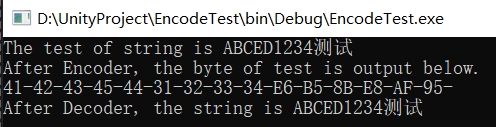
【例】利用 Encoder 和 Decoder 类实现编码和解码。
using System;
using System.Text;
public class Program
{
    static void Main(string[] args)
    {
        //Encode
        string test = "ABCED1234测试";
        Console.WriteLine("The test of string is {0}", test);
        Encoding encoding = Encoding.UTF8;
        char[] source = test.ToCharArray();
        int strLength = test.Length;
        int len = encoding.GetEncoder().GetByteCount(source, 0, strLength, false);
        byte[] result = new byte[len];
        encoding.GetEncoder().GetBytes(source, 0, strLength, result, 0, false);
        Console.WriteLine("After Encoder, the byte of test is output below.");
        foreach(byte b in result)
        {
            Console.Write("{0:X}-", b);
        }
        Console.WriteLine();
        //Decoder
        Console.Write("After Decoder, the string is ");
        int deslen = encoding.GetDecoder().GetCharCount(result, 0, result.Length);
        char[] des = new char[deslen];
        encoding.GetDecoder().GetChars(result, 0, result.Length, des, 0);
        foreach(char c in des)
        {
            Console.Write("{0}", c);
        }
        Console.WriteLine("\n");
        Console.ReadKey();
    }
}
程序运行结果