示例:结构数组
post by:追风剑情 2020-4-17 9:46
示例:让用户输入看过的电影
#define _CRT_SECURE_NO_WARNINGS
#include <stdio.h>
#include <stdlib.h>
#include <string.h>
//提供CHAR_BIT的定义,CHAR_BIT表示每字节的位数
#include <limits.h>
//C99定义了bool、true、false
#include <stdbool.h>

#define TSIZE 45 //储存片名的数组大小
#define FMAX 5   //影片的最大数量

struct film {
	char title[TSIZE]; //影片名称
	int rating; //评级(0~10)
};

char* s_gets(char* st, int n);

int main(int argc, char* argv[])
{
	struct film movies[FMAX];
	int i = 0;
	int j;

	puts("Enter first movie title:");
	while (i < FMAX && s_gets(movies[i].title, TSIZE) != NULL &&
		movies[i].title[0] != '\0')
	{
		puts("Enter your rating <0-10>:");
		scanf("%d", &movies[i++].rating);
		while (getchar() != '\n')
			continue;
		puts("Enter next movie title (empty line to stop):");
	}
	if (i == 0)
		printf("No data entered.");
	else
		printf("Here is the movie list:\n");

	for (j = 0; j < i; j++)
		printf("Movie: %s Rating: %d\n", movies[j].title, movies[j].rating);
	printf("Bye!\n");

	system("pause");
	return 0;
}

// 自己实现读取函数
char* s_gets(char* st, int n)
{
	char* ret_val;
	int i = 0;
	ret_val = fgets(st, n, stdin);
	if (ret_val) //即,ret_val != NULL
	{
		while (st[i] != '\n' && st[i] != '\0')
			i++;
		if (st[i] == '\n')
			st[i] = '\0';
		else
			while (getchar() != '\n')
				continue;
	}
	return ret_val;
}
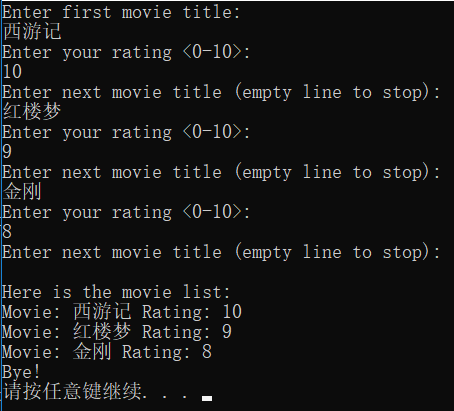
运行测试
评论:
发表评论: