C语言—strcpy()
post by:追风剑情 2019-10-30 19:56
strcpy()函数用来拷贝字符串。
示例
//Visual Studio中加上这句才可以使用scanf()
//否则只能使用scanf_s()
#define _CRT_SECURE_NO_WARNINGS
#include <stdio.h>
#include <stdbool.h>
//引入字符串函数string.h
//一些ANSI之前的系统使用strings.h头文件,而
//有些系统可能根本没有字符串头文件。
#include <string.h>

#define SIZE 40
#define LIM 5

char * s_gets(char * st, int n);

//argc: 参数个数 argv[]: 参数数组
int main(int argc, char *argv[])
{
	char qwords[LIM][SIZE];
	char temp[SIZE];
	int i = 0;

	printf("Enter %d words beginning with q:\n", LIM);
	while (i < LIM && s_gets(temp, SIZE))
	{
		//if (strncmp(temp, "q", 1) != 0)
		if (temp[0] != 'q')
			printf("%s doesn't begin with q!\n", temp);
		else
		{
			strcpy(qwords[i], temp);
			i++;
		}
	}
	puts("Here are the words accepted:");
	for (i = 0; i < LIM; i++)
		puts(qwords[i]);

	//char target[20];
	//int x;
	//x = 50; //数字赋值
	//strcpy(target, "Hi ho!"); //字符串赋值
	//target = "So long"; //语法错误
	//char * str;
	//有问题,str未初始化,该字符串可能被拷贝到任意地方
	//strcpy(str, "The C of Tranquility");

	system("pause");
	return 0;
}

char * s_gets(char * st, int n)
{
	char * ret_val;
	int i = 0;
	ret_val = fgets(st, n, stdin);
	if (ret_val) //即,ret_val != NULL
	{
		while (st[i] != '\n' && st[i] != '\0')
			i++;
		if (st[i] == '\n')
			st[i] = '\0';
		else
			while (getchar() != '\n')
				continue;
	}
	return ret_val;
}
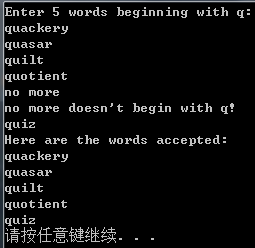
运行测试
示例:strcpy()的返回值
//Visual Studio中加上这句才可以使用scanf()
//否则只能使用scanf_s()
#define _CRT_SECURE_NO_WARNINGS
#include <stdio.h>
#include <stdbool.h>
//引入字符串函数string.h
//一些ANSI之前的系统使用strings.h头文件,而
//有些系统可能根本没有字符串头文件。
#include <string.h>

#define SIZE 40
#define WORDS "beast"

//argc: 参数个数 argv[]: 参数数组
int main(int argc, char *argv[])
{
	const char * orig = WORDS;
	char copy[SIZE] = "Be the best that you can be.";
	char * ps;

	puts(orig);
	puts(copy);
	//将orig拷贝到copy的第7个位置并覆盖之后的字符
	//ps指向copy的7个索引
	ps = strcpy(copy + 7, orig);
	puts(copy);
	puts(ps);

	system("pause");
	return 0;
}
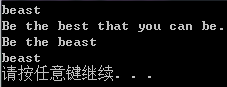
运行测试
评论:
发表评论: