C语言—gets_s()
post by:追风剑情 2019-10-21 19:39
C11新增的gets_s(),比fgets()少了第3个参数
示例
//Visual Studio中加上这句才可以使用scanf()
//否则只能使用scanf_s()
#define _CRT_SECURE_NO_WARNINGS
#include <stdio.h>
#include <stdbool.h>

#define STLEN 10

char * s_gets(char * st, int n);

//argc: 参数个数 argv[]: 参数数组
int main(int argc, char *argv[])
{
	char words[STLEN];
	puts("Enter a string:");
	//C11新增的gets_s(),比fgets()少了第3个参数
	/*
	1. gets_s()只从标准输入中读取数据,所以不需要第3个参数。
	2. 如果gets_s()读到换行符,会丢弃它而不是储存它。
	3. 如果gets_s()读到最大字符数都没有读到换行符,会执行以下几步。
	首先把目标数组中的首字符设置为空字符,读取并丢弃随后的输入直至
	读到换行符或文件结尾,然后返回空指针。接着,调用依赖实现的“处理函数”
	(或你选择的其他函数),可能会中止或退出程序。
	*/
	//当输入字符越过STLEN-1时,会导致程序报错。
	gets_s(words, STLEN);
	puts(words);

	system("pause");
	return 0;
}

// 自己实现读取函数
char * s_gets(char * st, int n)
{
	char * ret_val;
	int i = 0;
	ret_val = fgets(st, n, stdin);
	if (ret_val) //即,ret_val != NULL
	{
		while (st[i] != '\n' && st[i] != '\0')
			i++;
		if (st[i] == '\n')
			st[i] = '\0';
		else
			while (getchar() != '\n')
				continue;
	}
	return ret_val;
}
运行测试
测试1:输入未超长
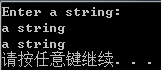
测试2:输入超长
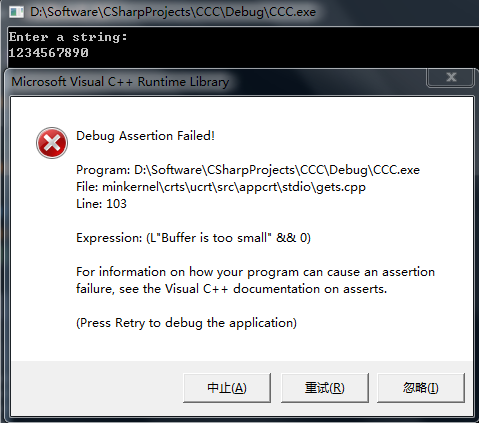
评论:
发表评论: